About ESOBE
ESOBE 2026 is the 16th edition of the European Seminar On Bayesian Econometrics.
From a scientific perspective, it is closely related to the Economics, Finance, and Business
(EFaB) section
of the International Society for Bayesian Analysis (ISBA).
The ESOBE meetings are relatively small in person workshops that usually take two days.
They are organised annually in different locations in Europe, although recently they have also been hosted in the U.S. (New Orleans, 2018) and Australia (Melbourne, 2025).
A distinctive feature of ESOBE meetings is that they typically involve a significant share of PhD students and early-career researchers, offering them an opportunity to interconnect with established senior scholars and professionals within the Bayesian community.
The meetings have no particular theme, and they encourage discussion and promote research in Bayesian methods, computation, and applications primarily (but not only) inspired by the fields of economics and finance.
The collection of all previous ESOBE editions can be found here.
Event Starts In:
Venue
The conference is hosted in Rome, by the Department of AI, Data and Decision Sciences of Luiss University.
The venue is the main campus, located in Viale Romania 32 (red dot in the map below), in lecture rooms AT01 and AT02.
The conference dinner will be at 20:15 at "Cascianese Country Club"
(better known as "il maneggio di Villa Ada" -- blue dot in the map below), within the beautiful Parco di Villa Ada
(address: Via Salaria 267, Rome). The park entrance is approximately 10 minutes walk from the venue, then from the gate,
there is a 10-15 minute walk (1.2km) inside the villa.
Further information about how to reach the campus and hotel suggestions are available here.
Keynote Speakers


Schedule
The timing in the schedule below reflects the actual local time accounting for daylight saving time (CEST, corresponding to UTC+2). You can download a PDF file with the updated schedule, the logistics, and all other useful info by clicking the "Download booklet" button above.
9:15 - 10:15
Coffe break
Session 1
Variable ordering in a Cholesky-MSV model for stock market data
Martina Zaharieva, CUNEF Universidad
A dynamic factor model for level and volatility
Sofia Velasco, Banco de España
Machine learning portfolio choice under parameter uncertainty
Daniele Bianchi, Queen Mary University of London
A geometric approach to factor model identification
Sylvia Kaufmann, Study Center Gerzensee
Martina Zaharieva, CUNEF Universidad
A dynamic factor model for level and volatility
Sofia Velasco, Banco de España
Machine learning portfolio choice under parameter uncertainty
Daniele Bianchi, Queen Mary University of London
A geometric approach to factor model identification
Sylvia Kaufmann, Study Center Gerzensee
Lunch & Poster session 1
Heterogeneous g-priors for networks with dyadic covariance structures
Rigers Behluli, University of Warwick
Bottom-up Bayesian predictive synthesis for Euro area inflation Petra Greso, University of Strathclyde Conformal Bayesian inference and stochastic volatility Mario Giuseppe Caputo, University of Klagenfurt Endogenous selection and spillovers: Bayesian inference for policy-relevant causal effects Duong Trinh, University of Graz Bayesian nonparametric time-series modeling of CPI growth rates via Dirichlet process mixtures with time-BART kernels and SV-ICA volatility Marios Christofidis, King's College London Estimation of correlation matrices via Gaussian copula models Yiyan Chen, King's College London Improving model-based clustering of matrix-variate data with shrinkage priors Gertraud Malsiner-Walli, Vienna University of Economics and Business
Rigers Behluli, University of Warwick
Bottom-up Bayesian predictive synthesis for Euro area inflation Petra Greso, University of Strathclyde Conformal Bayesian inference and stochastic volatility Mario Giuseppe Caputo, University of Klagenfurt Endogenous selection and spillovers: Bayesian inference for policy-relevant causal effects Duong Trinh, University of Graz Bayesian nonparametric time-series modeling of CPI growth rates via Dirichlet process mixtures with time-BART kernels and SV-ICA volatility Marios Christofidis, King's College London Estimation of correlation matrices via Gaussian copula models Yiyan Chen, King's College London Improving model-based clustering of matrix-variate data with shrinkage priors Gertraud Malsiner-Walli, Vienna University of Economics and Business
14:05 - 15:05
Young Researchers Session 1(a)
Sequential Bayesian persuasion: Algorithmic optimization of entrepreneurial decision making in the context of uncertainty
Lina Arustamyan, Vienna Graduate School of Finance and Vienna University of Economics and Business
Volume-driven time-of-day effects in intraday volatility models
Igor F.B. Martins, Örebro University
Searching for parallel trends: Discovering diff-in-diff estimators
Rafael Alcantara, University of Texas at Austin
Lina Arustamyan, Vienna Graduate School of Finance and Vienna University of Economics and Business
Volume-driven time-of-day effects in intraday volatility models
Igor F.B. Martins, Örebro University
Searching for parallel trends: Discovering diff-in-diff estimators
Rafael Alcantara, University of Texas at Austin
Young Researchers Session 1(b)
Sparse Markov switching models via cumulative shrinkage
Luca Gherardini, University of Klagenfurt
What can we learn from and about sufficient macro statistics under set-identification?
Martin Fankhauser, Bocconi University
Robust Bayesian VARs through power posteriors
Tobias Scheckel, Austrian Institute of Economic Research
Luca Gherardini, University of Klagenfurt
What can we learn from and about sufficient macro statistics under set-identification?
Martin Fankhauser, Bocconi University
Robust Bayesian VARs through power posteriors
Tobias Scheckel, Austrian Institute of Economic Research
Coffe break
Session 2 -- In memory of George Tiao
Simultaneous graphical dynamic modeling
Mike West, Duke University
Network modeling of asynchronous change-points in multivariate time series
Maria Kalli, King's College London
Time-varying factor augmented vector autoregression with grouped sparse autoencoder
Jim Griffin, University College London
Bayesian change point detection in VAR processes
Stefano Peluso, Università Cattolica del Sacro Cuore and Università della Svizzera italiana
Mike West, Duke University
Network modeling of asynchronous change-points in multivariate time series
Maria Kalli, King's College London
Time-varying factor augmented vector autoregression with grouped sparse autoencoder
Jim Griffin, University College London
Bayesian change point detection in VAR processes
Stefano Peluso, Università Cattolica del Sacro Cuore and Università della Svizzera italiana
8:45 - 9:45
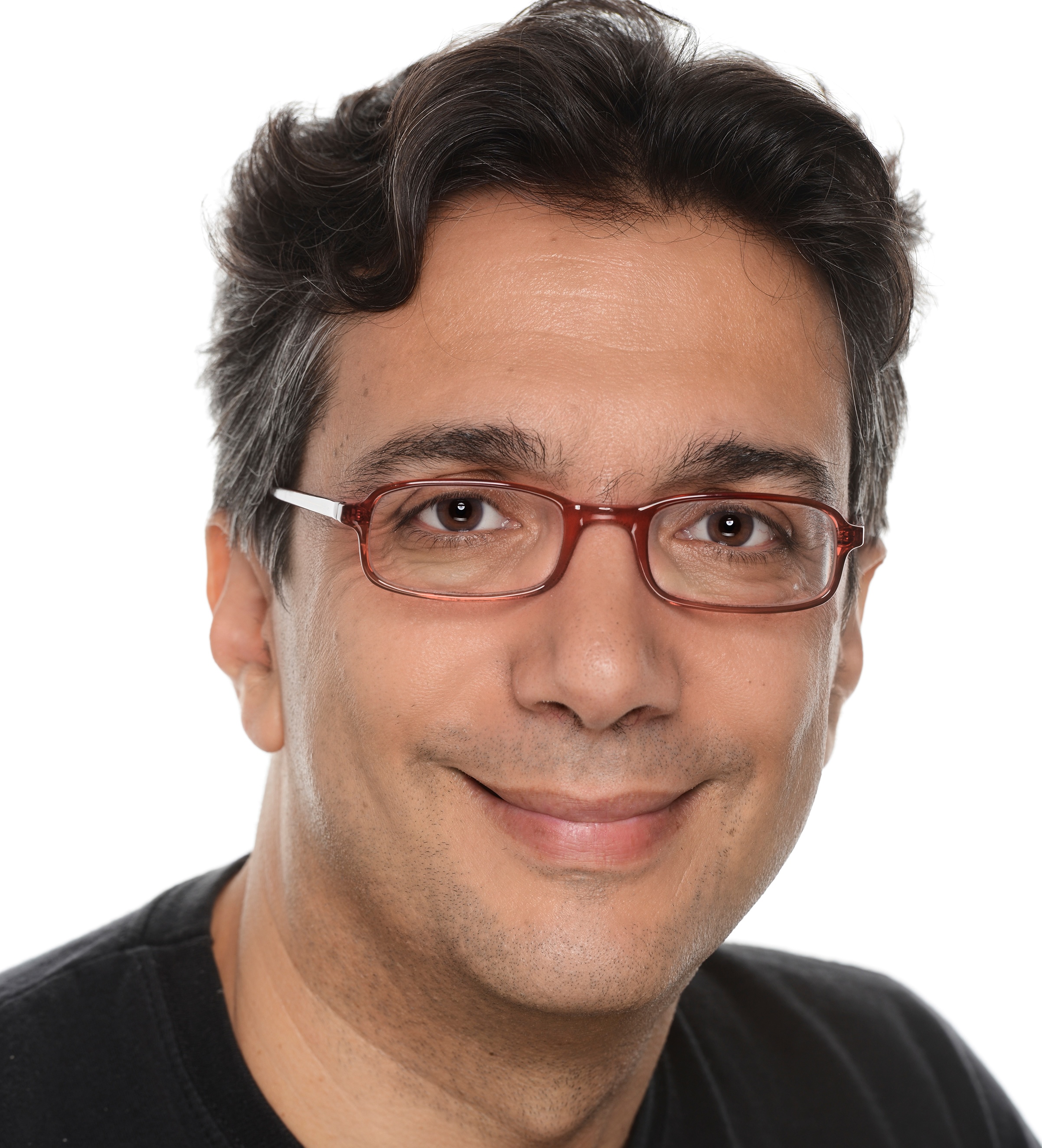
Keynote talk - Conception Ausín
Multivariate extreme joint dependencies using nonparametric copulas
Abstract →
Abstract →
Coffe break
Session 3
Every forecaster matters: Efficient modeling of the survey of professional forecasters for density nowcasting
Cem Cakmakli, Durham University
Sharpening identification in large structural VARs using narrative restrictions
Lukas Berend, FernUniversität in Hagen
Probabilistic anchoring of inflation expectations
James Mitchell, Federal Reserve Bank of Cleveland
Multivariate uncertainty and distributional transmission
Maximilian Schröder, European Central Bank
Cutting the chain: Adaptive mixtures for heterogeneous DSGE estimation
Stefano Grassi, University of Rome "Tor Vergata"
Cem Cakmakli, Durham University
Sharpening identification in large structural VARs using narrative restrictions
Lukas Berend, FernUniversität in Hagen
Probabilistic anchoring of inflation expectations
James Mitchell, Federal Reserve Bank of Cleveland
Multivariate uncertainty and distributional transmission
Maximilian Schröder, European Central Bank
Cutting the chain: Adaptive mixtures for heterogeneous DSGE estimation
Stefano Grassi, University of Rome "Tor Vergata"
Lunch & Poster session 2
Bayesian sequential learning under non-stationarity
Simone Cuonzo, Sapienza University of Rome
Quasi-Bayesian hierarchical models
Thomas Glinnan, London School of Economics and Political Science
A structural matrix autoregressions framework for international spillovers
Ignacio Moreira Lara, University of Duisburg-Essen
A Bayesian Gaussian process dynamic factor model
Niko Hauzenberger, University of Strathclyde
Nowcasting with heavy-tailed mixed-frequency vector autoregression models
Sune Karlsson, Örebro University
Modeling university outcomes: A hidden Markov model approach
Edoardo Pandolfo, Sapienza University of Rome
A Bayesian synthetic control approach for trend-cycle decompositions of potential outcomes
Xuewen Yu, Fudan University
Young Researchers Session 2(a)
Uncertainty everywhere: Integrating conceptual uncertainty in the stochastic discount factor
Luis Gruber, University of Klagenfurt
Bayesian dynamic modeling of realized volatility in financial asset price forecasting
Patrick Woitschig, Duke University
Log-regularly varying scale mixture of asymmetric Laplaces for robust Bayesian quantile regression
Dongu Han, Meiji University
Luis Gruber, University of Klagenfurt
Bayesian dynamic modeling of realized volatility in financial asset price forecasting
Patrick Woitschig, Duke University
Log-regularly varying scale mixture of asymmetric Laplaces for robust Bayesian quantile regression
Dongu Han, Meiji University
Young Researchers Session 2(b)
Time-varying variable selection for macroeconomic forecasting: A Bayesian regression tree approach
Hyun J.S. Chu, University of Notre Dame and Korea University
Time-varying recalibration of predictive distributions via Beta and neural spline flow transformations
Callum Wu, University College London
A Bayesian dynamic latent space model for weighted networks
Antonio Peruzzi, Ca' Foscari University of Venice
Hyun J.S. Chu, University of Notre Dame and Korea University
Time-varying recalibration of predictive distributions via Beta and neural spline flow transformations
Callum Wu, University College London
A Bayesian dynamic latent space model for weighted networks
Antonio Peruzzi, Ca' Foscari University of Venice
Session 4
The impact of heteroskedasticity in observational studies of causal effects
Ivan Jeliazkov, University of California at Irvine
Relaxing the Fréchet assumption in spatial economics: A finite mixture approach
Andriy Norets, Brown University
Compressed Bayesian tensor regression
Roberto Casarin, Ca' Foscari University of Venice
Ivan Jeliazkov, University of California at Irvine
Relaxing the Fréchet assumption in spatial economics: A finite mixture approach
Andriy Norets, Brown University
Compressed Bayesian tensor regression
Roberto Casarin, Ca' Foscari University of Venice
Coffe break
Session 5
A conformal level set method for multiple-output panel quantiles
Annika Camehl, Erasmus University Rotterdam
Dynamic Bayesian regression quantile synthesis for forecasting outlook-at-risk
Genya Kobayashi, Meiji University
Bayesian additive regression tree copula processes for scalable distributional prediction
Jan Martin Carl Wenkel, Karlsruhe Institute of Technology
Annika Camehl, Erasmus University Rotterdam
Dynamic Bayesian regression quantile synthesis for forecasting outlook-at-risk
Genya Kobayashi, Meiji University
Bayesian additive regression tree copula processes for scalable distributional prediction
Jan Martin Carl Wenkel, Karlsruhe Institute of Technology
Closing remarks
Abstract submission - CLOSED
You are invited to submit a paper for the contributed oral sessions as well as a poster session.
We invite contributions from all fields of Bayesian econometrics (macro, micro, and financial), as well as on Bayesian theory, computing, and machine learning.
Young Researcher Session: Ph.D. students and researchers who received their Ph.D. after August 2022 may apply to present their work in a dedicated "young researcher session".
Travel awards: Ph.D. students who are members of both ISBA and the EFaB section may apply for a travel grant of up to EUR 300.
For further details, see the call for papers.
Deadline:27 April 6 May 2026 CLOSED
Submission decision notifications will be sent by the end of May 2026.
Young Researcher Session: Ph.D. students and researchers who received their Ph.D. after August 2022 may apply to present their work in a dedicated "young researcher session".
Travel awards: Ph.D. students who are members of both ISBA and the EFaB section may apply for a travel grant of up to EUR 300.
For further details, see the call for papers.
Deadline:
Submission decision notifications will be sent by the end of May 2026.
Registration
Registration fees include participation to the conference, coffee breaks, two lunches, and the social dinner (on Thursday 27th).
| ISBA member | Non-ISBA member | |
|---|---|---|
| Regular | 380.00 € | 480.00 € |
| PhD | 280.00 € | 330.00 € |
You can apply for ISBA membership here. After subscribing to ISBA, return to the ESOBE2026 website and register for the conference.
Registration opening: 8 June 2026
Registration deadline: 24 June 2026 for presenters (oral, young, poster)
All other participants shall register by 3 July 2026.
To register, follow these instructions:
- Create an EasyConferences account through www.easyconferences.org
- Activate your account, by clicking on the activation link sent to you.
- After verifying your email, register by logging-in through the direct link
esobe2026/register
(if you log-in through www.easyconferences.org and not the direct link, you will need to locate the conference within the list of conferences) - Finalize the registration securely through the online payment methods.
If you encounter any issues, please do not hesitate to contact the conference organizing committee at esobe2026@gmail.com .
Contacts
Committees
Scientific committee
🪑 Sylvia Frühwirth-Schnatter, Vienna University of Economics and Business
Gary Koop, University of Strathclyde
Roberto Casarin, Ca' Foscari University of Venice
Annika Camehl, Erasmus University of Rotterdam
Matteo Iacopini, Luiss University
Organizing committee
🪑 Matteo Iacopini, Luiss University
Alessia Caponera, Luiss University
Marta Catalano, Luiss University
Marco Perone Pacifico, Luiss University